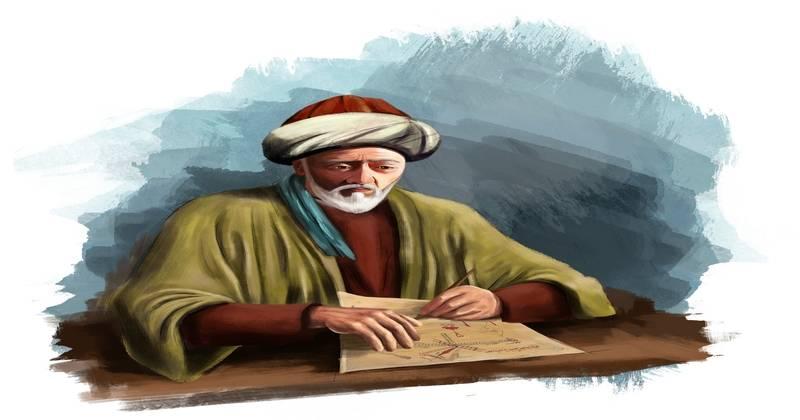
In the history of Islamic scholarship, there exist certain towering figures who illuminate the horizons not only of their own era but of all generations that follow. These are the architects who molded the culture of the society in which they lived, blazing new trails in the realms of language, literature, Sufism, and science. Ahmed-i Khani [rahmatullahi alayh], one of the great personages of the 17th century, is precisely such a figure. He was at once a Sufi, a poet, and a visionary thinker who foresaw the needs of future generations. His life stands as a concrete embodiment of profundity in knowledge, self-sacrifice, and a keen consciousness of social responsibility.
To speak of Ahmed-i Khani is not merely to acquaint oneself with a historical figure; it is, in the same breath, to draw a roadmap for ourselves. For Khani interpreted the moral perfection of the individual, the unity and vitality of society, the education of children, and the consciousness of national identity within an Islamic framework, weaving these sensibilities deeply into his works.
His Life and Intellectual Environment
Born in 1651 near Dogubayazıt, Agrı, Ahmed-i Khani received a madrasa education from a young age. He mastered Arabic, Persian, and Kurdish at an advanced level in the centers of learning of his time, deepening his expertise in fields such as Tafsir (exegesis), Hadith, Fiqh (jurisprudence), Kalam (theology), logic, mathematics, astronomy, and Sufism. Khani’s educational journey was not limited to theoretical knowledge; like the itinerant scholars of the era, he traveled to various lands, enriching both his scientific and cultural accumulation.
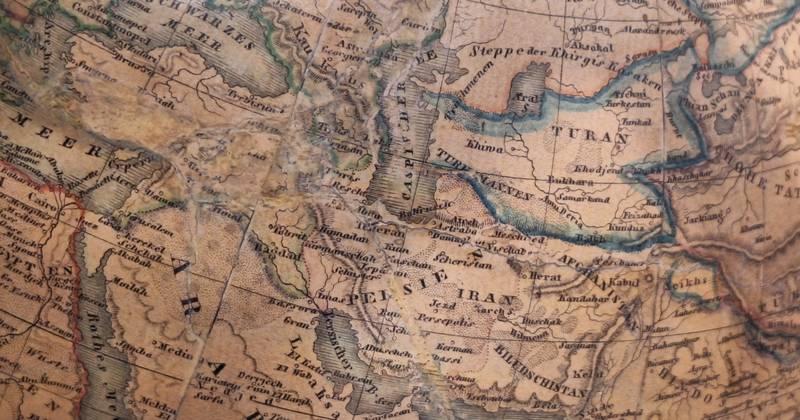
The geography in which he was raised was under the strain of the struggle for influence between the Ottomans and the Safavids; yet, at the same time, it hosted a robust madrasa tradition. During that period, the madrasas of Cizre, Bitlis, Hakkâri, Erzurum, and Doğubayazıt functioned as the intellectual reservoir of the region. This atmosphere enabled Ahmed-i Khani to mature not merely as a scholar, but as an opinion leader striving to revive his society.
Social and Political Conditions of the Era
The age in which Khani lived was a period when the political integrity of the region was damaged, tribal feuds were intensifying, and the scholarly tradition had begun to weaken. Cultural dissolution, political instability, and social injustices were straining the society. This situation became one of the fundamental factors guiding his works and thought.
In an era when social unity was fractured, Ahmed-i Khani advocated that a nation could only stand tall through knowledge and the education of children.
His Scientific and Intellectual Personality
Ahmed-i Khani was a multifaceted personality. He was a poet, a Sufi, a linguist, an educator, a sociologist, and a thinker. In his works, he displayed an understanding that synthesized the fundamental concepts of Islamic thought with local culture. By placing the ideal of the Insan-ı Kamil (The Perfected Human Being) at the center of Sufism, he correlated the internal purification of the individual with the resurrection of society.
One of Khani’s most defining characteristics was his linguistic consciousness. While he possessed a command of Arabic and Persian classics, he exerted great effort for the preservation and development of the Kurdish language. According to him, a society’s identity is preserved through language; and language, in turn, is strengthened if nourished by knowledge and wisdom.
His aspect as an educator is also exceedingly prominent. The fact that he penned works for the education of children indicates his belief that the foundation of social transformation lies in knowledge. His establishment of a madrasa and his engagement in teaching for years prove that he was not merely a theoretical educator, but a practical one.
His Works
The works of Ahmed-i Khani are texts that have become classics in both literary and scholarly terms. His writings are the pillars supporting a language, a culture, and a vision of civilization.
1. Nubihara Bicuqan: This is an educational book written for children. It is a work where moral education, tenets of faith, social behaviors, and basic sciences are explained in plain language. In this respect, Khani is one of the rare scholars who produced works specifically for the education of the common people and children.
2. Eqideya Imane This is a work in which theological subjects (Aqaid) are treated in verse. By explaining the foundations of Islamic belief in simple language, he aimed to make them understood by the broad masses.
3. Mem u Zin This is Ahmed-i Khani’s most famous work. It is not merely a love story; it is a Sufi, social, and philosophical text. The love between Mem and Zin processes, through symbolic language, the human journey toward the Truth (Haqq), how love matures the human being, and the impact of social conflicts on the individual. The work is considered the zenith of Kurdish literature.
4. Diwana Hani This consists of poems with predominantly Sufi content. In these poems, which possess a gnostic (irfani) style, themes of Divine love, the inner world of the human being, and the march toward perfection are explored.
5. Other Works It is known that he penned various prose works in the fields of grammar, astronomy, Sufism, and ethics. Additionally, there are course texts he prepared to be taught in the madrasas of the region.
AUTHOR
Abdurrahman Hakan Pakiş