
Mawlana Jalaluddin Rumi (1207–1273) stands as one of the most towering thinkers, poets, and Sufi mystics ever nurtured by Islamic civilization. For centuries, his name has been the first to come to mind—not only across the Islamic geography but throughout the world—whenever the subjects of love, tolerance, and spiritual profundity are invoked. He was bestowed the title Mawlana, meaning "Our Master," and the demonym Rumi, signifying his residence in the land of Anatolia (Rum).
Life and Intellectual Evolution: The Rise of a Sun from Balkh to Konya
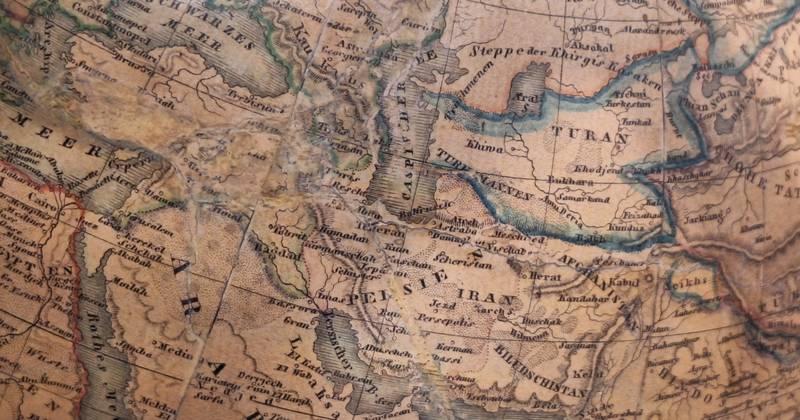
Mawlana was born on September 30, 1207 (6 Rabi’ al-Awwal 604), in the city of Balkh, Khorasan. His father was Muhammad Bahaaddin Walad, a preeminent scholar of his era known by the title Sultan al-Ulama (Sultan of Scholars), and his mother was Muminah Hatun. Around 1212, Bahaaddin walad was compelled to leave Balkh with his family, driven by political instability and intellectual disagreements with the ruling authority, Khwarazmian Shah Alauddin Muhammad.
The migration caravan, which included the young Mawlana, marked the first significant milestones of his spiritual journey. In Nishapur, they met the great mystic Fariduddin Attar, who presented the young prodigy with his work, Asrar-Nameh (The Book of Secrets). Upon their return from the pilgrimage to Mecca, they crossed paths in Damascus with the great scholar of the age, Muhyiddin Ibn Arabi. Watching the young Mevlânâ walking behind his father, Ibn Arabi reportedly remarked, "Glory be to God! An ocean is following a lake," a statement regarded as a harbinger of Mawlana’s future spiritual magnitude.
After traversing various cities such as Malatya and Sivas, the caravan entered Anatolian lands, settling in Lârende (Karaman) in 1222. Finally, in 1228, at the invitation of the Seljuk Sultan Alauddin Kaykubat, they migrated to the capital, Konya.
Intellectual Cultivation and the Guidance of Sayyid Burhaneddin
Following the death of Bahaaddin Walad in 1231, the young Mawlana assumed his father's position, beginning his career as a professor at the Altunaba (Iplikçi) Madrasa. A year later, Seyyid Burhanaddin Muhakkik-i Tirmidhi, a former disciple and successor of his father, arrived in Konya. Sayyid Burhaneddin aimed to help Mevlânâ not only perfect his command of the exoteric (zahir) sciences but also to advance in the esoteric (batin) sciences.
Mevlânâ served Seyyid Burhaneddin for nine years. acting upon his mentor's advice, he pursued further studies in Aleppo under Kamal al-Din ibn al-Adim and attended various madrasas in Damascus, earning ijazah (authorization) in both rational and traditional sciences. During this period, having engaged in ascetic discipline (riyazah) and seclusion (khalwa), Mawlana returned to Konya as a consummate scholar who had harmonized the exoteric and esoteric sciences within his own character.
The Turning Point: Shams of Tabriz and the Birth of Love
The radical transformation of Mawlana’s life and thought occurred upon his meeting with Shams of Tabriz on November 15, 1244. Until that moment, Mawlana had been a madrasa scholar; through this encounter, he became a poet of divine love, a guide of spiritual ecstasy.
According to narrations, during this meeting, Shams emphasized to Mawlana the primacy of irfan (gnosis)—which is based on "spiritual state" and "experiential taste"—over mere external knowledge, stating, "True knowledge is that which conducts one to the Known." Once Mawlana began his deep conversations with Shams, he abandoned his lectures at the madrasa, a situation that sparked jealousy and gossip among his disciples.
Due to the pressure from these disciples and certain spiritual signs, Shams left Konya twice (first in 1246, then in 1247). Following the second separation—which some accounts attribute to his assassination—it is recorded that Mawlana began to recite poetry born of love and longing, initiated the Sama gatherings, and maintained this ecstatic state until his passing. Mawlana articulated this profound shift with the words: "Previously, my love was hidden within my piety; now, my piety is hidden within my love."
After Shams, Mawlana entrusted the spiritual care of his disciples first to Salahuddin Zarqub and subsequently to Husamaddin Chelebi. It was through the encouragement of Husamaddin Chelebi that the Masnavi came into existence.
His Immortal Works: The Wellspring of Gnosis
1. Masnavi-i Sharif: Comprising 25,618 couplets, this work is one of the most significant Sufi and didactic texts of Islamic culture. Referred to by titles such as Fiqh-i Akbar (The Greater Jurisprudence) and Sayqal al-Arwah (The Polish of Spirits), the Masnavi expounds upon themes of Divine Unity (Tawhid), the Perfect Human, and Divine Love through stories and allegories.
2. Divan-i Kabir: A vast collection of poetry consisting of ghazals and quatrains (rubaiyat), reflecting the ecstatic state Mawlana derived from Divine Love. In these poems, he generally used the pen name "Shams." The majority of these verses belong to the period following his meeting with Shams.
3. Fihi Ma Fih: A prose work compiled from Mawlana’s discourses, recorded by his son Sultan Veled or another disciple. It is a text of direct guidance (irshad), shedding light on a multitude of issues ranging from daily life to deep Sufi matters.
4. Majalis-i Sab’a (The Seven Sermons): This consists of the speeches Mawlana delivered during his sermons and assemblies. In addition to interpreting relevant Quranic verses and Hadiths, these sermons also feature poetry from poets such as Sanai and Attar.
5. Maktubat (Letters): This collection comprises letters written by Mawlana to various individuals for different reasons. While some were sent to family members and disciples, the majority were penned to rulers to convey the requests of the needy. These letters demonstrate Mevlânâ’s sensitivity to the problems and needs of society.
The Sources of Mevlânâ’s Thought: The Quran, The Sunnah, and Love
The source of Mawlana’s religious and Sufi thought is the Quran and the Sunnah. He expressed this allegiance in the couplet, "I am the servant of the Quran as long as I have life. I am the dust on the path of Muhammad, the Chosen One..." illustrating his position with the metaphor: "I am like a compass; while standing firmly with one foot on the Sharia, I travel through the seventy-two nations with the other," thereby indicating his ability to embrace all of humanity as a Muslim.
According to Mawlana, true Tawhid is realized when the servant strips away their own ego and transcends their relative existence. Unity is not a matter of incarnation (hulul) or unification (ittihad), but rather the servant’s passing away from their own relative existence. In the presence of Allah, there cannot be two "I"s. Addressing this, he says, "You say 'I', and He says 'I'. Either you die or let Him die so that this duality does not remain. Since His death is impossible, it falls upon you to die," emphasizing the Sufi principle of "dying before death."
Although Mawlana viewed the intellect as useful in worldly affairs, he considered Love the sole guide in reaching divine truths. In the spiritual journey where the intellect falls short, Divine Love is the most potent force that lifts the veil between the servant and Allah.
Legacy
Mawlana Jalaluddin Rumi passed away in Konya on Sunday, December 17, 1273. Following his death, the Mawlawi order was organized by Husamaddin Chelebi and later by Mawlana's son, Sultan Walad. Through this organization, Mawlana’s ideas—propagated especially through the Masnavi and the Sema—spread across the globe.
His thought represents not only the zenith of Islamic Sufism but also provides a roadmap for every individual seeking love, peace, and spiritual awakening on a global scale. Mawlana’s heritage continues to be one of the most powerful sources for contemporary humanity in its quest to attain meaning, tolerance, and inner peace.